Snake Cobra: A Sharp Twist for Embroidery Projects
First Impressions: Playful Yet Polished
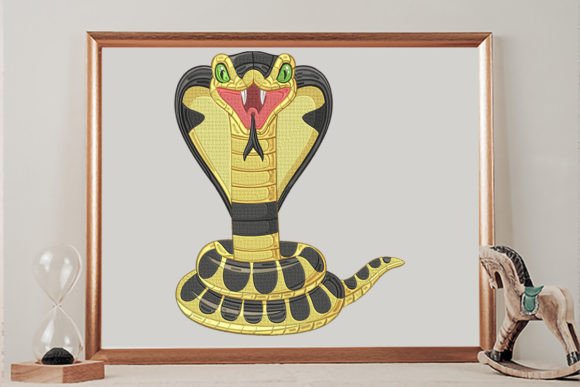
When I first opened the Snake Cobra embroidery file, I was struck by its bold personality. It’s not your average reptile design—it carries a whimsical edge with just the right amount of attitude. The cobra’s posture is poised, almost theatrical, with a stylized curve that suggests motion and confidence. It’s clearly meant for makers who want to add a bit of visual spice without going over the top.
The design balances simplicity and detail well. There’s enough texture in the scales and hood to make it visually engaging, but it doesn’t rely on overly dense stitching that could overwhelm lighter fabrics. It’s the kind of design that could easily work for both kids’ items and edgier adult apparel, depending on how it’s styled and where it’s placed.
Real-World Use: From Tote Bags to Baby Onesies
I decided to test the Snake Cobra on a few different project types to see how it would hold up. My first test was on a cotton tote bag. The design stitched cleanly, and the contrast between the snake and the background was sharp. It gave the tote a boutique-style finish that would appeal to customers looking for something a little different.
Next, I tried it on a baby onesie. I was curious how the design would scale down. I used a smaller hoop and adjusted the settings accordingly. The result was surprisingly cute—still recognizable as a cobra, but with a softness that worked for baby wear. It definitely adds a playful element to a typically sweet category of products.
I also stitched it onto a dark-colored sweatshirt to test thread contrast and stitch clarity. The machine embroidery design handled the dark background well, especially with a bright thread choice for the eyes and hood. It’s a great example of how a reptile-themed design can be versatile, not just for novelty but for everyday wearable art.
Where to Use It—and Where to Be Careful
Snake Cobra is a flexible embroidery file, but like any design, it has its limits. It works best on flat, stable surfaces like tote bags, tea towels, pillow covers, and sweatshirts. These materials provide a consistent base that lets the design shine without distortion.
However, I’d recommend caution when using it on curved surfaces like baseball caps or stretchy knit fabrics. The satin stitch detail on the cobra’s face and hood can pucker slightly if the fabric isn’t properly stabilized. If you’re planning to embroider on a curved cap, make sure to use a cap frame or specialty hoop to maintain stitch integrity.
It’s also wise to test the design on textured or loosely woven fabrics before committing. I tried it on burlap for a rustic kitchen towel project, and while the effect was charming, the fill stitch didn’t lay as smoothly as on cotton. For such fabrics, you may want to adjust the stitch density or add a lightweight fusible stabilizer underneath.
Visual Impact and Market Appeal
One of the strongest points of Snake Cobra is how it elevates the perceived value of a finished product. Whether it’s stitched onto a boutique tote or a personalized sweatshirt, the design gives off a sense of craftsmanship and intention. It doesn’t feel mass-produced—it has a handmade charm that Etsy sellers and small shop owners will appreciate.
From a customer perspective, the design is distinctive enough to stand out but not so niche that it limits its audience. It appeals to a broad range of buyers: parents looking for fun baby embroidery, crafters wanting a standout gift idea, or even boutique owners curating a quirky collection. The cobra’s expression is cheeky, not intimidating, which makes it approachable for a wide variety of users.
For digital product sellers, this design is also a solid asset for printable mockups. I tested it in a few digital mockup templates for tote bags and sweatshirts, and it scaled well across formats. If you’re selling embroidery files or finished products online, having a design like Snake Cobra in your lineup can help boost engagement and conversions.
Designer Notes: What to Watch For
Before diving into your next project with Snake Cobra, here are a few practical tips based on my testing:
- Test on scrap fabric first—especially if you’re using a new thread color or unfamiliar fabric type.
- Check thread contrast carefully. The design’s facial details rely on subtle shading, so poor contrast can dull the overall effect.
- Review stitch density if you’re using textured or loosely woven materials.
- Confirm hoop size before stitching—this design may not fit in smaller hoops without resizing, which can affect detail.
- Use the right stabilizer for your fabric type. A medium-weight tear-away works well for most cottons and knits.
- Inspect small details like the cobra’s eyes and hood edges after stitching—they should remain crisp and well-defined.
- Test in black and white mockups to see how the design reads without color—this is especially useful for digital product previews.
- Compare light and dark fabric backgrounds to see which thread palette works best.
- Confirm licensing if you’re planning to sell finished items or include the design in a commercial embroidery project.
Final Thoughts: A Versatile Addition to Your Design Kit
Overall, Snake Cobra is a smart choice for embroidery designers and craft entrepreneurs looking to add a bit of flair to their product line. It’s versatile enough for a variety of items—custom apparel, baby embroidery, holiday gifts, and more—while still offering a unique visual identity that sets it apart from generic reptile designs.
Whether you're an Etsy seller building a collection of themed embroidery files or a small business owner creating personalized gifts, this machine embroidery design delivers both style and practicality. Just be mindful of fabric choice, thread contrast, and stabilization, and you’ll end up with a finished product that looks sharp and professionally stitched.
If you're looking for a design that's both fun and functional, Snake Cobra deserves a spot in your embroidery project rotation.